

Introduction
The common experience of picking up a phone to check one notification and losing twenty minutes to three unrelated videos is usually explained as a personal failing, as a lack of discipline or a failure to try harder. That framing is comforting to platforms and useless to the people using them, because it misdiagnoses what happened. The user is not outmatched by personal weakness but by a system with far more information about behaviour than any individual has, refined continuously by measuring what keeps people looking.
This is not a conspiracy, and it does not require anyone to have acted in bad faith. It follows from a business model. When a service is free, the thing being sold is the time and attention of the people using it, and everything downstream of that fact follows logically.
What Is the Attention Economy?
Advertising-funded platforms earn more when people stay longer. More time means more advertisements seen, more behavioural data generated, and a more detailed profile to sell against. Engagement is therefore not a vanity metric; it is the closest available proxy for revenue, and it is what teams are measured on.

That single fact explains most of what follows. A design decision that increases time on the platform will tend to win internal arguments against one that does not, even when everyone involved has good intentions.
How Do the Design Mechanisms Work?
A handful of design patterns do most of the work.
Removed stopping cues. A newspaper ends. A book has a page count. An infinite feed has neither, so there is no moment where the medium signals that it is finished, and stopping becomes an active decision made against a system designed to defer it.
Unpredictable rewards. Most posts are unremarkable, but occasionally something genuinely funny, useful or emotionally charged appears. Rewards delivered on an unpredictable schedule sustain attention more effectively than rewards delivered reliably, which is why a mostly boring feed can still be difficult to put down.
Social feedback. Likes, replies and view counts attach a number to something people already care about deeply, which is how they are regarded by others, and that number arrives unpredictably too.
Autoplay and pre-loading. The next item begins before any decision to watch it has been made. The default is continuation, and defaults are powerful precisely because most people never change them.
Personalised ranking. Instead of showing everyone the same thing, recommendation systems predict what each person is most likely to watch or share, then rank accordingly. The system optimises for a prediction about behaviour, which is not the same as considered preference.

It is worth being precise, because the subject attracts overstatement. These systems do not read minds, and they are not uniformly effective; they are statistical machines that are right often enough to be commercially valuable. Describing them as irresistible flatters them and, more importantly, leaves people feeling powerless, which is both inaccurate and unhelpful.
What Does the Evidence Show?
Start with time, because it is the resource being spent. Ofcom's passive measurement found that three-quarters of the time UK adults spent online in May 2024 was on smartphones, which is to say most of it happened on a device that is always present and always interruptible. The context in which attention is captured has moved from a desk to a pocket.
The more interesting change is in how people feel about it. Ofcom's 2026 findings, reported by the Guardian, show a marked shift in sentiment: the proportion of adults saying the benefits of being online outweigh the risks fell to 59%, from 72% in 2024. The share saying these platforms are good for mental health fell to 36%. Two in five report spending too much time on screens most days, and around a third have deleted an app because of the time it consumed or its effect on them.
Set against that, one figure complicates the story. Average daily time online still rose, to four hours and thirty minutes. People are more uneasy and no less occupied, and that gap is what the subject is really about.
There is a democratic dimension as well. When ranking systems favour whatever holds attention, emotionally charged material has a structural advantage over careful material, and that shapes which arguments travel without anyone deciding that it should.
How Do These Patterns Show Up in Practice?
Watch for the patterns and they become difficult to unsee.
The interrupted errand. An app opened for a specific purpose presents the feed before the tool, and the specific intention gets absorbed into general browsing.
The refresh reflex. Pull to refresh is a deliberate physical gesture with an uncertain payoff, and it is not accidental that the motion resembles operating a slot machine.
Manufactured scarcity. Content that disappears after a day converts browsing into something with a deadline.
Streaks and counters. A number that resets if activity stops turns a preference into an obligation.
Notification bundling. Alerts are frequently delivered in batches at moments calculated to bring people back, not at the moment the underlying event occurred.
None of these is sinister on its own. Together they add up to an environment in which continuing is easy and stopping requires effort.
What Value Do These Platforms Provide?
The case against pretending this is all harm is straightforward: these platforms deliver real value that did not previously exist for most people.
Someone teaching themselves a skill has access to instruction that once required money and proximity. A small business reaches customers without an advertising budget. People living with rare conditions find others who understand. Communities scattered across continents stay in contact. In Nigeria and across much of Africa, social platforms function as genuine commercial infrastructure, not merely as entertainment.
The opportunity is not to renounce any of this. It is to capture the value while paying less for it in attention, which is a design problem that can be solved on the user's side of the screen.
What Are the Limitations and Open Questions?
The evidence on harm is genuinely contested. Research linking social media use to mental health outcomes is mixed, and much of it is correlational; people who are already struggling may use these platforms more, which is a different claim from the platforms causing the struggle. Anyone stating the science is settled, in either direction, is overreaching.
Self-report is unreliable. People are poor at estimating their own screen time, which is why regulator data based on passive measurement is more useful than surveys asking people to guess.
The burden is being placed on individuals. Advice about personal discipline quietly accepts that the design will not change, which is a reasonable short-term strategy and a poor long-term settlement.
Attention is also not evenly distributed. Someone with a demanding job and no childcare has less capacity to manage this than someone with time and autonomy, and framing it purely as personal responsibility ignores that.
How Can These Platforms Be Used Deliberately?
The aim is not abstinence. It is restoring the friction that the design removed.
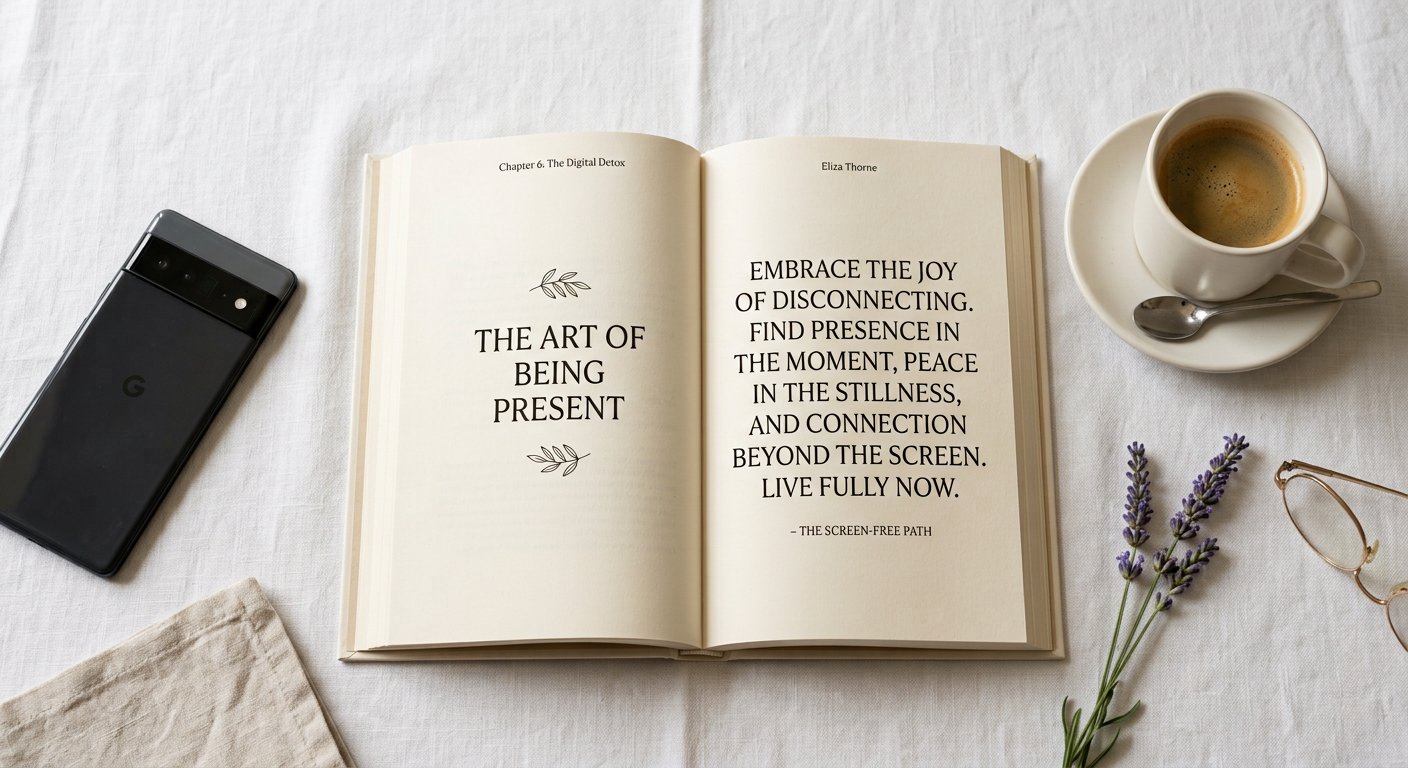
- Switching off non-human notifications. Alerts from people are worth having; alerts generated by an algorithm to bring a user back are not.
- Entering through search, not the feed. Going in with a specific purpose means the feed loses its first opportunity.
- Reintroducing an ending. A timer, an alarm, or simply deciding the number of items in advance restores the stopping cue the interface removed.
- Moving the apps. Off the home screen and out of the thumb's reach, small increases in effort measurably reduce casual opening.
- Separating the tool from the feed. The messaging function can be used without the timeline where the platform allows it.
- Auditing occasionally. Checking what was actually consumed, and whether it would be chosen again, does more work than any app setting.
Conclusion
The phrase "distraction by design" is precise, not rhetorical. These systems are not badly built; they are extremely well built, for a purpose that differs from the user's, and the gap between those two purposes is where the time goes.
Recognising that changes the question. It stops being about self-control and becomes about whether the environment in use was arranged in the user's interest. Usually it was not, and once the individual mechanisms are visible, each of them becomes a decision that can be made differently.
The wider shift may be slower than the current mood suggests. UK adults report growing unease while spending slightly longer online each year, and that gap between attitude and behaviour is the honest state of things. It suggests the change, when it comes, will be gradual and partly regulatory, not a sudden collective decision to look away.
Attention has become the commodity that funds much of the modern internet, and the market for it extends well beyond social feeds. Competitive gaming is built on the same economics, which is examined in the rise of esports.
Frequently asked questions
Is social media deliberately designed to be addictive?
Designers optimise for engagement, which is measurable and tied to revenue. Whether that meets a clinical definition of addiction is contested, but the mechanisms used, such as variable rewards and removed stopping cues, are well understood and deliberately chosen.
Why is it so much harder to stop scrolling than to stop reading a book?
A book has a page count and chapters, which are natural stopping points. An infinite feed removes them entirely, so ending a session requires an active decision instead of simply arriving at the end.
Does deleting social media fix the problem?
For some people it helps, but it also removes real professional, educational and community value. Most of the practical evidence points towards changing how the platforms are used, not abandoning them.
Are people actually cutting back?
UK regulator data suggests attitudes are changing faster than behaviour. Fewer adults now say the benefits outweigh the risks, and about a third say they have deleted an app because of the time it took or its effect on their mental health, but the average time spent online each day still went up.
Is the algorithm showing me what I want, or shaping what I want?
Both, and separating the two is genuinely difficult. Recommendation systems learn from what holds attention, which is not always the same as what would be chosen on reflection.
Sources
- Adults' media use and attitudes — Ofcom, 2026-04-02Supports: Ofcom's annual evidence base on media use, attitudes and understanding among UK adults aged 16 and over, drawn from its Adults' Media Literacy Tracker.
- Is the UK falling out of love with social media? — The Guardian, 2026-04-05Supports: Reporting on Ofcom findings that 49% of adult social media users now post, share or comment against 61% in 2024; that the share saying the benefits of being online outweigh the risks fell to 59% from 72%; that 40% report spending too much time on screens most days; and that average daily time online rose to four hours thirty minutes.
- Online Nation 2024 report — Ofcom, 2024-11-28Supports: Passive-panel measurement showing that three-quarters of the time UK adults spent online per day in May 2024 was on smartphones.