Introduction
A multimodal AI model is an artificial intelligence system trained to interpret more than one type of input, such as text, images, audio and video. Earlier generations of software handled these input types separately, if at all, and relied on people to translate the contents of a photograph or a recording into text before any processing could take place.
This arrangement has begun to change. A single class of model now accepts a screenshot, a recording, a scanned contract and a paragraph of instruction, and can answer questions that involve all four at once. The practical effect is that the interface between people and computers has widened, particularly for work involving documents, images and sound.
The subject warrants careful examination because marketing claims have frequently run ahead of the evidence. Published benchmark results tell a more measured story than launch announcements, and understanding where these systems perform well, and where they do not, matters for anyone considering them for real work.
Historical Background
Earlier approaches treated each input type as its own discipline. Speech recognition systems converted audio into text. Optical character recognition, or OCR, converted images of documents into text. Image classifiers sorted pictures into fixed categories. Each was a specialist tool, and combining them meant passing the output of one into the input of another, losing information at every step.
Multimodal models take a different approach. Instead of building a separate system for each input type, they convert every input, whatever its original form, into a common numerical representation known as an embedding: a list of numbers positioned within a shared mathematical space. A photograph of a bicycle and the word "bicycle" end up near one another in that space. Because everything lives in the same representation, the model can reason across inputs without passing summaries between separate tools.
How Do Multimodal Models Work?
When a user supplies a picture, an encoder divides it into patches and converts each patch into a vector. Those vectors are placed into the same sequence as the tokens of a written prompt. From the model's perspective, there is no meaningful boundary between the question and the picture; both are simply positions in one sequence that the model attends over.
This design explains a capability that pipelines of separate tools could not provide. A multimodal model can answer a question such as "does the third row of this table contradict the claim in the paragraph above it?" because both the table and the paragraph remain present during processing. A pipeline of separate tools would struggle with the same question, because the relationship between the table and the paragraph is lost once each is processed in isolation.
It is worth noting that the term "multimodal" covers a set of quite different skills. Reading dense text in a photographed document is not the same problem as tracking an object through ninety minutes of video, which differs again from interpreting an unlabelled chart. Published results reflect this: different systems lead on different tasks, and some engineering teams route each task to a different model instead of standardising on one.
Where Are Multimodal Models Used Today?
Documents, forms and charts
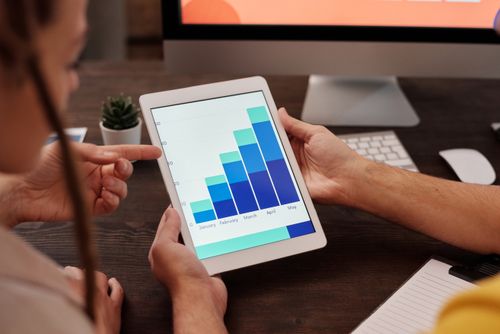
The most established use is document understanding: extracting structure from invoices, claims, identity documents and reports where layout carries meaning. This task is well suited to the technology because the results are verifiable; if a model reads a total incorrectly, the error can be checked against the arithmetic. Much of the manual work previously required to parse documents, such as layout detection and hand-written extraction rules, can now be replaced by a question in plain language.
The same capability applies to archives. Many organisations hold decades of scanned records, engineering diagrams, recorded calls and site photographs that were stored but never made searchable. Being able to ask questions of such collections changes what an archive is for.
Accessibility
Screen description and live scene narration are among the clearest applications, because a fluent and approximate description is genuinely more useful than no description at all. The tolerance for imperfection is higher here than in settings such as medical triage.
Video review and long recordings
Understanding long videos is less mature than the other applications. Vendor-published figures show meaningful capability on long-form video understanding, but independent research has been more cautious. The Video-MMMU study, part of the Massive Multi-discipline Multimodal Understanding family of benchmarks, tested models on 300 expert-level teaching videos across six disciplines and found that performance declined progressively as tasks moved from perceiving information to comprehending it and applying it to a new problem. This pattern, competent at surface recall and weaker at transfer, recurs across the published literature.
What Does the Evidence Show?
Standard benchmarks have saturated
Results on standard multi-discipline image tests no longer separate leading systems, which now cluster within a few points of one another, a difference within run-to-run variation. A strong score on one of these saturated benchmarks therefore provides limited information about a system's actual capability.
Models rely on text more than they appear to
The most significant finding concerns how much of a model's apparent visual understanding is actually inference from text. The MMMU-Pro benchmark, introduced by Xiang Yue and colleagues in a 2025 paper, was constructed by filtering out questions that text-only models could already answer, and then embedding the remaining questions inside images so that systems had to genuinely read and see at the same time. Accuracy fell by between 16.8 and 26.9 percentage points across the models tested, which suggests that a portion of apparent visual understanding was, in fact, language-model inference from context.
Confident errors remain a problem
A blurred figure, an ambiguous chart or an unusual layout does not reliably produce an expression of uncertainty. More often, it produces a fluent and incorrect answer, which is more dangerous than a refusal because it reads as authoritative.
Limitations and Open Problems
Several practical constraints continue to limit deployment. Images and video consume far more of a model's context than text, so costs rise quickly at volume, and video in particular remains expensive enough that many plausible applications are not yet economic. Latency follows the same pattern.
Privacy presents a separate concern. Photographs and recordings carry incidental information that text does not, such as faces in the background, documents on a desk and location clues. Sending them to a third-party service is a materially different disclosure from sending a paragraph of text, and it warrants its own assessment, and should not simply inherit an existing text policy.
Conclusion
Multimodal models represent a real advance, and a narrower one than launch announcements suggest. Collapsing the boundary between reading and seeing within a single system has unlocked genuine value in document processing, accessibility and archive retrieval. What these systems have not achieved is general perception, and the benchmark constructed specifically to test that claim found a gap that headline scores conceal.
The practical question, therefore, is not whether these systems can see. It is whether a given task tolerates a confident wrong answer, and whether anyone would catch it. Where checking is cheap, as with a total on an invoice, the technology is usable today. Where checking is expensive and a plausible error would pass unnoticed, the case is considerably weaker. Progress from here is likely to be measured in reliability, not in the number of input types a model accepts, because adding another input type is now straightforward while producing trustworthy answers about what is actually present in an image is not.
Frequently asked questions
What is the difference between a multimodal model and an image recognition system?
An image recognition system classifies pictures into known labels. A multimodal model represents images and text in the same space, so it can answer open questions about an image, compare it with a document, or explain what it shows.
Do multimodal models actually see, or do they guess from context?
Both, and separating the two is an active research problem. The MMMU-Pro benchmark was built specifically to filter out questions a text-only model could answer, and scores dropped substantially once that crutch was removed.
Can one model handle every modality well?
Not at present. Published results show different systems leading on video, long documents and chart reasoning respectively, which is why some production deployments route each task to a different model.
Are multimodal models reliable enough for regulated work?
They are used in regulated settings with human review, but not as an unchecked authority. They can produce confident, fluent descriptions of things that are not in the image, so a verification step remains necessary.
Sources
- MMMU-Pro: A More Robust Multi-discipline Multimodal Understanding Benchmark — Xiang Yue and colleagues, arXiv (ACL 2025 Main), 2025-05-22Supports: Model accuracy falls by 16.8 to 26.9 percentage points on MMMU-Pro compared with MMMU, and the benchmark filters out questions answerable by text-only models.
- Video-MMMU: Evaluating Knowledge Acquisition from Multi-Discipline Professional Videos — arXiv, 2025-01-23Supports: Model performance declines progressively as the cognitive demand of video-based tasks increases, across 300 expert-level videos in six disciplines.
- Gemini model family: published benchmark results — Google DeepMindSupports: Vendor-published scores for long video understanding, chart reasoning and document comprehension, used here as vendor-reported figures, not independent evaluation.